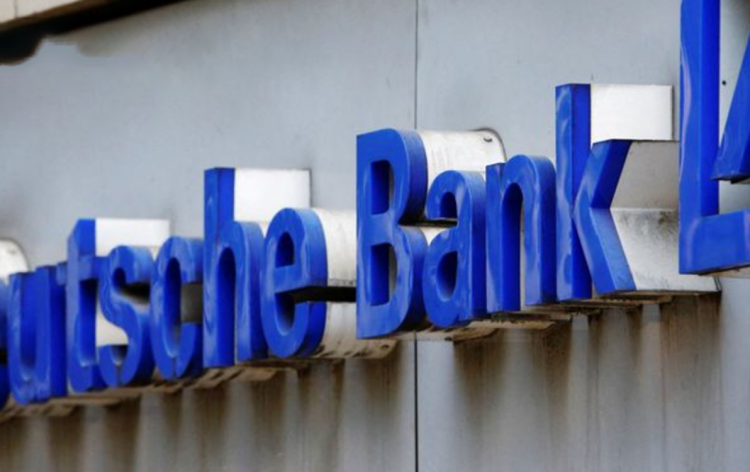
Unexpectedly, Deutsche Bank plans to launch legal action, bringing a liquidation claim against the well-known Chinese real estate behemoth, Shimao Group. The banking giant is expected to move decisively, according to Reuters reporting, which is causing some consternation in the financial community.
This action highlights the complex relationships between international financial institutions and significant players in the Chinese real estate industry and suggests possible repercussions across international markets. In addition to potentially affecting Shimao’s future, the ongoing legal dispute between Deutsche Bank and other parties may raise more general questions regarding the stability of financial transactions in the dynamic world of international trade.
Deutsche Bank’s Brave Step: Getting Through China’s Property Crisis in Uncharted Waters
According to reports, Deutsche Bank is preparing to launch an extraordinary liquidation case against Shanghai-based Chinese developer Shimao Group in Hong Kong. This coincides with an increase in credit defaults and a worsening crisis in China’s real estate market. A $1 billion bond payment was missed in July 2022, causing Shimao, one of the many Chinese developers struggling with offshore bond default, to have its whole $11.7 billion offshore debt declared in default.
Shimao’s creditor Deutsche Bank is reportedly unhappy with the conditions of the developer’s debt restructuring, which is why the German bank is suing this month. The informants revealed that Deutsche Bank’s credit exposure to Shimao is connected to unreported sums of private dollar bonds, but they wished to remain anonymous because of the delicate nature of the matter.
This possible legal dispute is an unusual instance in which a well-known international financial institution has filed a liquidation lawsuit against a Chinese developer. These cases have becoming progressively less common since the real estate industry had a financial crisis in 2021. The world’s most indebted real estate developer, China Evergrande Group, was ordered to liquidate earlier this year by a Hong Kong court in response to a case brought by a local creditor.
The largest private property developer in China, Country Garden, has also been the subject of a liquidation petition due to its noncompliance with repayment commitments, further complicating the already complex scenario. Homebuyers’ worries about the future of the real estate market are heightened by Beijing’s efforts to revive the struggling sector through a slew of assistance measures that correspond with these legal steps.
The rise of liquidation applications filed against developers corresponds with the liquidity crisis that hit China’s real estate market in 2021 as a result of regulatory actions taken to rein in a development boom driven by debt. With the increasing number of liquidation applications filed against Chinese developers, economists predict that enterprises will face increased pressure to come up with restructuring plans that satisfy creditors.
Deutsche Bank’s move is similar to that of its foreign competitors, HSBC and Standard Chartered, both of which had significant write-downs as a result of their investments in local banks that were involved in China’s real estate market. Liquidation petitions have not been common, but Deutsche Bank’s upcoming lawsuit brings attention to the difficulties encountered by international banks involved in China’s real estate crisis.
Formerly a major force in China’s real estate market, Shimao started official talks to restructure its $11.7 billion offshore debt in 2022. The revised debt reform plan, which was put forth in December of last year, sought to use debt exchanges and new loans with longer maturities to cut offshore debt by as much as $7 billion. Nevertheless, it has been claimed that creditors have objected to the suggested 50% decrease in their investments, highlighting the intricate talks that are still ongoing.
Deciphering Shimao: Consequences for Financial Traders Amid Legal Action by Deutsche Bank
The impending liquidation case between Deutsche Bank and Chinese developer Shimao Group has a ripple effect on traders’ portfolios throughout the world’s financial markets. With concerns over Shimao’s financial soundness, traders may experience disruptions in a number of ways.
First off, the ongoing legal dispute affects derivatives linked to Shimao’s debt by causing volatility in associated markets. Investors in credit default swaps or options that are correlated with the developer’s financial condition may be subject to more volatile markets, which could result in unanticipated profits or losses.
Furthermore, there may be domino consequences on the already stressed Chinese real estate market as a whole. Exchange-traded funds (ETFs), bonds, and stocks related to Chinese real estate may cause traders to become more sensitive to market movements, necessitating tactical changes to reduce risk.
Furthermore, when traders reevaluate their exposure to the Chinese yuan, the circumstance can cause changes in the currency markets. Traders of foreign exchange may be impacted by concerns about the stability of Shimao and the wider property market, which would call for flexible risk management techniques.
International financial institutions might struggle with the fallout as well, especially those owning bonds issued by Shimao. Traders who oversee diversified portfolios need to keep a close eye on events since possible default situations could force investors to reevaluate their capital allocation and risk tolerance.
To put it simply, the Deutsche Bank-Shimao scandal adds another level of complexity to the financial markets, making it harder for traders to pursue the best possible portfolio performance by navigating dynamic dynamics with caution and flexibility.